
Research Projects
Earth Futures
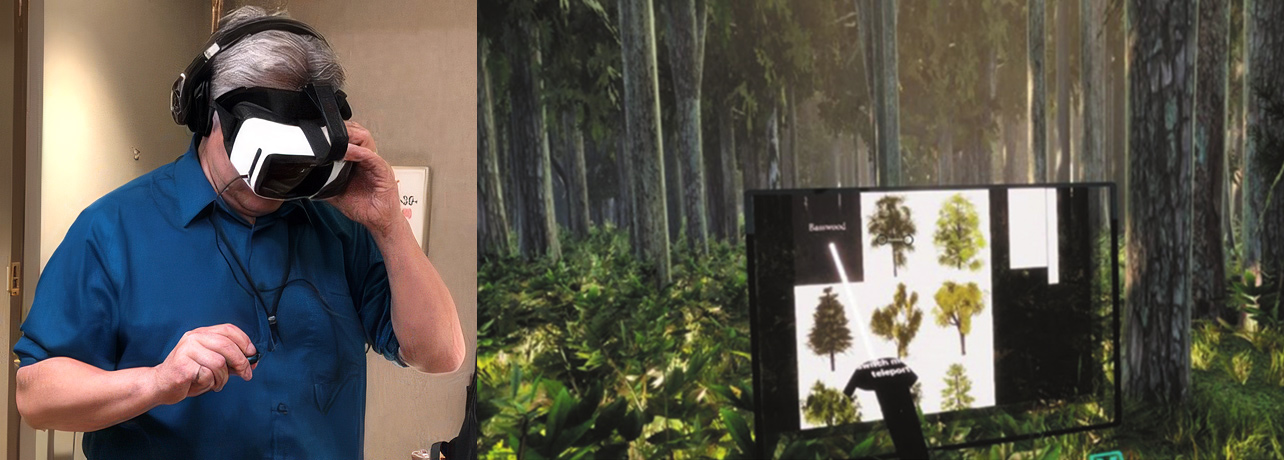
Visualizing Forest Futures
Some ecosystems, such as the Greater Yellowstone Ecosystem in the Sub-alpine Rocky Mountain region of the U.S., are adapted to severe, stand replacing wildfire that have occurred throughout the Quaternary. Together with our collaborators, our research, using both field research and landscape modeling, has shown that these forested ecosystems are resilient, in terms of carbon storage and nutrient cycling, to these extreme events, largely returning to pre-fire conditions prior to the next fire. However, climate change is making these rare events more frequent. Our research has demonstrated a 10-fold increase in the pace of these extreme fire events. Now, work is focused on providing guidance to land managers about how to support forest resilience through spatial planning.
SELECTED PRODUCTS:
- Lucash MD, Williams N, Srikrishnan, V, Keller K, Scheller, RM, Helgeson C, Nicholas RE, Smithwick EAH. 2023. Balancing multiple forest management objectives under climate change in central Wisconsin, U.S.A., Trees, Forests, and People 14: 100460.h https://doi.org/10.1016/j.tfp.2023.100460
- Nasr-Azadani E*, Smithwick EAH. Steidle SJ, Lucash MS, Wardrop DH, Fregien N, Kenote Jr T. 2023. Integrating Menominee model for sustainable forestry with Systems Thinking competency through 3D virtual tours. Sustainability Science 18: 2605-2628. https://doi.org/10.1007/s11625-023-01399-w
- Steidle S, Lucash ML, Nasr-Azadani E*, Smithwick EAH. 2023. Testing presence, assessing attitudes: study of a virtual tour in an “aesthetically challenged” landscape, Journal of Environmental Management 337: 117574. https://doi.org/10.1016/j.jenvman.2023.117574
- Olson SK*, Smithwick EAH, Lucash MS, Scheller RM, Nicholas RE, and Ruckert K, Caldwell C. 2021. Landscape-scale forest re-organization following insect invasion, harvest, and climate change. Ecosystems, https://doi.org/10.1007/s10021-021-00616-w.
- Smithwick, EAH, Caldwell C, Klippel A, Scheller R, Tuana N, Bird R, Keller K, Lucash M, Nicholas R, Olson S, Ruckert K, Oyler J, Helgeson C, Huang, J. 2019. Transdisciplinary collaborative learning for triangulating ways of knowing across traditional and Western knowledge systems concerning future climate and forests. Collaboration Across Boundaries for Social-Ecological Systems Science, Perz Stephen G., ed., Palgrave Macmillan. https://doi.org/10.1007/978-3-030-13827-1_1
- Lucash M, Ruckert KL, Nicholas RE, Scheller RM, Smithwick EAH. 2019. Complex interactions among successional trajectories and climate govern spatial resilience after severe windstorms in central Wisconsin, U.S.A., Landscape Ecology, online 07 Nov 2019, https://doi.org/10.1007/s10980-019-00929-1.
POLARIS
How do environmental changes impact social well-being, the subsistence way of life, and community infrastructure in Arctic Alaska? This interdisciplinary project explores how communities in Arctic Alaska are affected by environmental hazards and risks, including coastal erosion and flooding, declining sea ice cover, and changes in the availability and access to wild resources. Our contribution to the project was the development of a species distribution model of berry plants, which are critical to the dietary diversity and cultural livelihoods of Indigenous communities.

SELECTED PRODUCTS:
- Hamilton C*, Smithwick EAH. Spellman KV., Baltensperger AP, Spellman BT, Chi, G. 2023. Data for: Predicting berry plant habitat under climate change in Bristol Bay, AK https://doi.org/10.5061/dryad.7wm37pvxz [Data Set]
- Hamilton C*, Smithwick EAH. Spellman KV., Baltensperger AP, Spellman BT, Chi, G. 2024. Predicting the suitable habitat distribution of berry plants under climate change. Landscape Ecology 39 (18), https://doi.org/10.1007/s10980-024-01839-7
FUNDING EXAMPLES:
- National Science Foundation, CNH-L: Visualizing forest futures under climate uncertainty: integrating indigenous knowledge into decision support tools for collaborative decision making, 06/01/2016 – 05/31/2021, Principal Investigator, ($1,700,000)
- National Science Foundation. NNA-Navigating the New Arctic Track 1: Pursuing Opportunities for Long-term Arctic Resilience for Infrastructure and Society (POLARIS). Senior Personnel. (Principal Investigator: Guangqing Chi), 1/1/2020-12/31/2025 ($3,000,000)
Regenerative Agropastoral Landscapes (REGAL)
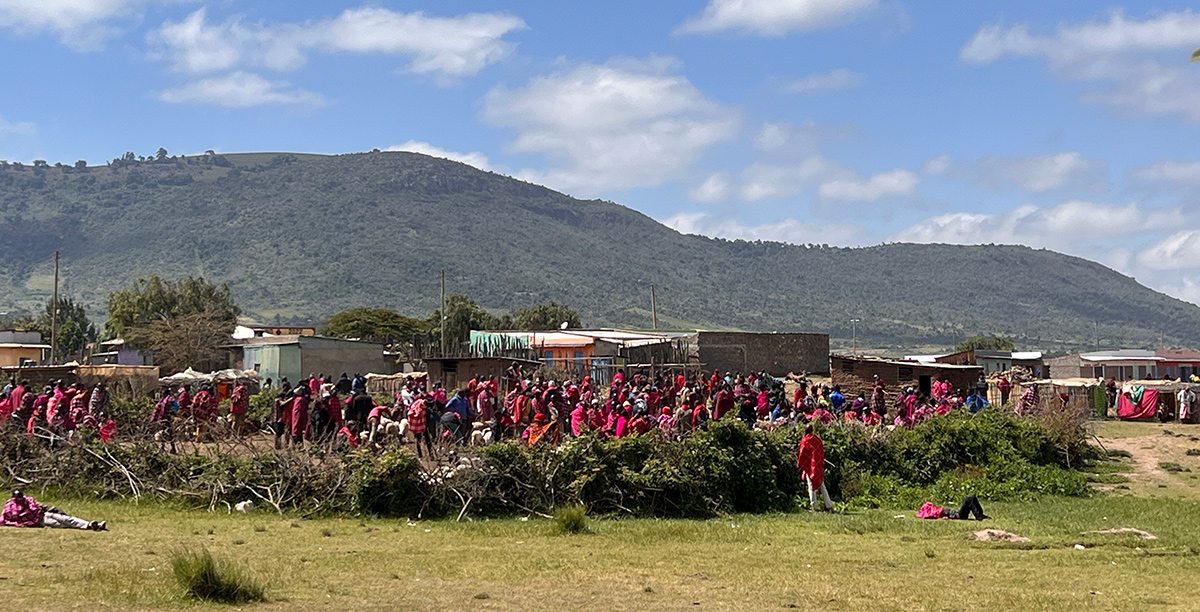
Millions of people depend on mixed agricultural and pastoral landscapes for their livelihoods and because of their unique conservation value. However, many of these systems are increasingly threatened by climate extremes, including drought, which threatens agricultural productivity. As a result of these cumulative stressors, these regions are experiencing increasing conflicts with global geopolitical significance. Here, we build upon conceptual models and techniques from multiple sub-disciplines of geography (landscape ecology, remote sensing, land change science) and related frameworks (socio-ecological systems, and resilience). We develop the concept of regenerative landscape design, in which landscape patterns and processes can be more purposely designed to lead to more desirable futures. Using case studies that span broad gradients in historical land tenure policies, biophysical settings, and contemporary or future stressors, this research explores the challenges and opportunities of landscape change and advances understanding of household adaptive capacity in the context of these historical, contemporary, and future landscape patterns. A better understanding of household and landscape level regenerative capacity can enhance agricultural and pastoral productivity and help guide landscape-level policies that support human well-being.
SELECTED PRODUCTS:
- Kotikot, SM, Smithwick EAH, Greatrex H. 2024. Observations of enhanced rainfall variability in Kenya, East Africa. Scientific Reports 14, 12915. https://doi.org/10.1038/s41598-024-63786-2
FUNDING EXAMPLES:
- National Science Foundation. NRT-INFEWS: Landscape-U, Impactful partnerships among graduate students and managers for regenerative landscape design. Principal Investigator, 2018-2023, ($3,000,000).
Center for Online Innovation in Learning, Penn State University. Interactive videos in online learning. Principal Investigator, 7/1/15 to 6/30/16, ($36,106) - National Science Foundation. GK-12: Carbon education and research together for humanity. Co-Principal Investigator, (Principal Investigator: Renee Diehl), 3/15/10 – 2/28/15, ($3,000,000)
- The Sustainability Institute Reinvention Fund, Penn State. Building sustainable communities through the digital global classroom. Principal Investigator, 7/1/2014-6/302015, ($36,500)
- National Science Foundation BCS 2149244 HEGS: Towards regenerative landscape futures: the role of policy legacies, environmental stress, and landscape change, OSP#225987, Principal Investigator, 2022-2025, 6/1/2022-5/31-2025, ($399,748).